May 29, 2026 —– Chart #352
Hello music friends,
Welcome back to another edition of Chart of the Week. This week’s song has one of the most recognizable opening vocal lines in all of popular music. You hear that high falsetto introduction and instantly know exactly what’s coming next.
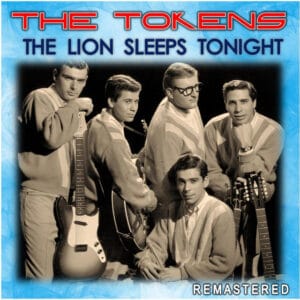
Today’s feature is “The Lion Sleeps Tonight” by The Tokens. It sounds lighthearted and simple on the surface—but the story behind this song stretches across continents, decades, and several different versions before it finally became a No. 1 hit in America. And it’s a fascinating journey.
Where the song really began
“The Lion Sleeps Tonight” actually started life in 1939 as a song called “Mbube,” written and recorded by South African singer Solomon Linda. Linda’s original recording featured his vocal group, The Evening Birds, and introduced the distinctive melodic pattern that would eventually travel around the world. The word mbube means “lion” in Zulu, and the song became very popular throughout South Africa.
Years later, folk musician Pete Seeger and his group The Weavers adapted the melody into a version called “Wimoweh.” That recording introduced the song to American audiences in the early 1950s.
Then came the version most of us know today.
The Tokens’ recording
In 1961, The Tokens recorded “The Lion Sleeps Tonight” with a newly written English lyric by George David Weiss, Luigi Creatore, and Hugo Peretti. Their arrangement transformed the song into something completely unique—part pop record, part vocal showcase, and part studio experiment.
The soaring falsetto lead by Jay Siegel became the signature sound of the track, supported by layered harmonies that gave the recording its unforgettable character. Released as a single that year, it quickly climbed to No. 1 on the Billboard Hot 100 and became the group’s biggest hit. More than sixty years later, it’s still instantly recognizable.
A song with a remarkable second life
Even after its chart success in 1961, “The Lion Sleeps Tonight” never really went away. It has resurfaced repeatedly in films, television, commercials, and stage productions over the years. A whole new generation discovered it through its appearance in The Lion King, which introduced the song to millions of listeners who may never have heard the earlier versions.
That kind of staying power is rare.
Why the record works
Part of the magic of this recording is its simplicity. The lyric is minimal. The rhythm is steady and relaxed. The harmony arrangement does most of the storytelling. Instead of relying on a complicated structure, the record builds its identity around texture and vocal layering.
And of course, that falsetto line floating over the top ties everything together. It’s one of those recordings that sounds effortless but clearly wasn’t.
A quick note for the guitar crowd
This one is surprisingly fun to play acoustically. The chord structure is straightforward, and once the groove settles in, the rhythm almost plays itself. The real challenge—and the real reward—is getting a few voices working together on the harmony parts. Even a small group can capture the spirit of the original recording if everyone leans into the arrangement.
Songs like this remind you how powerful voices can be when they lock in together. Give this one another listen this week and think about the distance it traveled—from a 1939 recording in South Africa to a No. 1 pop hit in the United States, and then on to become part of the soundtrack of several generations.
Not many songs take a journey like that.
Keep Rockin,
Stan