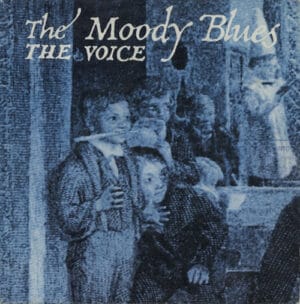
June 5, 2026 —– Chart #353
Hello music friends,
Welcome back to another edition of Chart of the Week. This week we return once again to one of the most distinctive and enduring bands in classic rock—The Moody Blues. Over the years they moved gracefully from orchestral progressive rock into a more modern, synthesizer-driven sound without losing what made them recognizable in the first place.
Today’s feature is “The Voice.” It’s one of the strongest examples of the Moody Blues’ early-1980s evolution and a reminder that the band was still writing powerful, melodic material well into their second decade together.
Who wrote it
“The Voice” was written by Justin Hayward and released in 1981 as the opening track on the album Long Distance Voyager. Hayward had already established himself as the band’s primary melodic architect through songs like “Nights in White Satin,” “Tuesday Afternoon,” and “The Story in Your Eyes.” With “The Voice,” he delivered another piece that balanced atmosphere, emotion, and accessibility in a way very few writers could match. It also helped introduce a new era for the band.
A fresh chapter for the Moody Blues
Long Distance Voyager marked the first Moody Blues album following the departure of keyboardist Mike Pinder, whose Mellotron work had been central to the group’s earlier sound. Rather than trying to recreate the past, the band leaned into a more contemporary production style built around synthesizers and cleaner arrangements. The result worked.
The album reached No. 1 on the Billboard 200 chart, and “The Voice” became one of its most recognizable tracks, receiving strong FM radio play and helping reintroduce the Moody Blues to a new generation of listeners.
The sound of the record
From the opening synth pulse to the lift of the chorus, “The Voice” immediately signals that this is a different Moody Blues than the late-1960s version—but it is still unmistakably them. Hayward’s vocal carries the same emotional clarity he brought to the band’s earlier classics, while the rhythm section provides a steady, confident foundation underneath the shimmering keyboard textures.
Then the chorus arrives:
I’m talking about the voice inside your head…
It’s classic Hayward—reflective, searching, and quietly uplifting at the same time.
The message behind the song
Like many Moody Blues recordings, “The Voice” explores inner awareness and personal direction. It’s about listening to that instinct that nudges you forward even when the path ahead isn’t completely clear. That theme runs throughout much of the band’s catalog, but here it’s delivered in a tighter, more radio-friendly format than some of their earlier work. It’s thoughtful without being heavy, and melodic without being complicated.
A quick note for the guitar crowd
This one translates especially well to acoustic guitar. The progression supports the vocal line in a very natural way, and once the rhythm settles in, the song has a comfortable, steady flow that makes it enjoyable to play.
Like many Moody Blues tunes, it really comes alive when you add a second voice for harmony. Even a simple arrangement captures the spirit of the original recording surprisingly well.
Give this one another listen this week and notice how smoothly the Moody Blues carried their signature sound into a new musical decade. Not many bands from the late 1960s managed that transition as successfully as they did. This track is a great example of how they pulled it off.
Keep Rockin, Stan