March 13, 2026 —– Chart #341
Hello music friends, welcome back to another edition of Chart of the Week. This week we’re going straight to the heart of 1980s country gold with “Forever and Ever, Amen” by Randy Travis.
If you grew up anywhere near a radio dial (or you’ve ever been to a wedding where the DJ owned at least one pair of cowboy boots), you know this song. It’s one of those rare tunes that feels like it has always existed, like somebody found it carved into the side of a barn next to “No shirt, no shoes, no problem.”
And here’s what I love about it: it’s not fancy. It’s not trying to impress anybody. It’s just perfectly built. Great lyric, great melody, great vocal, and a message so simple you can’t mess it up—unless you try.
The basics: who wrote it, when it hit, and how big it got
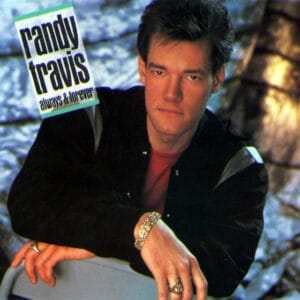
“Forever and Ever, Amen” was written by Paul Overstreet and Don Schlitz, recorded in January 1987, and released in March of that year as the lead single from Randy’s album Always & Forever. Produced by Kyle Lehning.
It went to number one on the country chart and stayed there for three weeks in the summer of 1987. That’s not just “a hit.” That’s “turn the radio on and it’s there again” level success.
And the awards followed like they usually do when the song is that undeniable: it won a Grammy for Best Country Song, plus Song of the Year honors from both the CMA and ACM. In other words, everybody in Nashville looked at it and said, “Yep. That one.”
How the song got its title
One of the sweetest little backstories is where the title came from. The phrase “forever and ever, amen” reportedly came from Don Schlitz hearing a child say it after prayers—one of those innocent, simple lines that adults hear and immediately think, “Well… that’s better than anything I’ve written this week.”
That’s why the lyric works. It doesn’t sound like a professional songwriter trying to sound romantic. It sounds like a real person trying to say something true without tripping over his own feet.
Why Randy Travis made it immortal
A lot of people could have cut this song. But Randy was the right guy because he sang it like he meant it and like he wasn’t trying to sell you anything.
His voice on this track is steady, warm, and direct—no drama, no showing off, no big vocal gymnastics. He delivers the lyric the way you’d actually say it to someone you love.
And that’s the Randy Travis secret sauce: he could make a simple line feel important.
The recording vibe
From everything you hear about that session, it wasn’t some tortured, weeks-long laboratory experiment. The track is clean, straightforward, and confident—more like a band that knew exactly what kind of record they wanted to make and went in and made it.
Which is exactly how it sounds. Nothing’s in the way. The vocal is out front. The groove is solid. The whole thing feels like a hand-written letter in a world that was starting to lean toward neon.
And the “Amen” at the end? That’s the period at the end of the sentence. It’s the little grin after you say something heartfelt and hope nobody makes it weird.
Why it still hits today
Because it’s not a “young love” song. It’s an “I’ve been around long enough to know what matters” song.
It’s about commitment, but it’s not mushy.
It’s romantic, but it’s not fragile.
It’s sweet, but it’s got backbone.
And in a fun modern twist, Randy’s story has made that final word even more meaningful. In recent years, when other artists have performed the song with him present, Randy has sometimes contributed the final “Amen.” If that doesn’t tighten your throat a little, you might want to check your pulse.
What it’s like to play
On guitar, this is one of the best kinds of songs: the chords aren’t hard, but the song sounds great.
The trick is feel. This one wants a gentle country pulse—steady, relaxed, and supportive. Don’t over-strum it. Don’t rush it. Let it breathe.
If you sing it, keep the vocal conversational. Randy didn’t oversell it, and neither should you. The lyric does the work. Your job is to stay out of its way.
And if you’ve got a buddy who can sing harmony, this song is practically begging for it. A simple high line on the chorus turns it into instant “everybody in the room knows this one” magic.
So that’s your assignment this week: play it, sing it, and appreciate what a perfectly written, perfectly delivered love song sounds like when it’s done by a guy who never needed to shout to be heard.
Keep Rockin’,
Stan Bradshaw