May 8, 2026 —– Chart #349
Hello music friends,
Welcome back to another edition of Chart of the Week. This week we return to one of my longtime favorite bands, The Moody Blues—but not the orchestral late-’60s Moody Blues we usually think about. Instead, we’re visiting their successful and very polished 1980s comeback period.
Today’s feature is “Your Wildest Dreams.” If you listened to the radio in the mid-1980s, you heard this one everywhere. And if you watched MTV, you probably remember the video just as clearly as the song itself. It was proof that a band that started in the British Invasion era could still sound completely relevant twenty years later.
Who wrote it
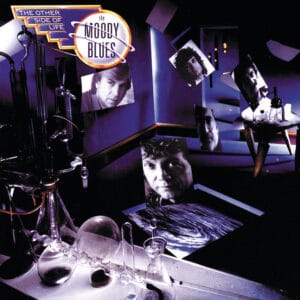
“Your Wildest Dreams” was written by Justin Hayward and released in 1986 on the album The Other Side of Life.
Hayward had always been the primary melodic voice of the band, responsible for classics like “Nights in White Satin,” “Tuesday Afternoon,” and “The Story in Your Eyes.” By the time this song came along, he had already built a remarkable songwriting legacy—but somehow still found a way to add another standout track to the catalog. This one feels personal right from the start.
The comeback nobody expected
By the early 1980s, many fans assumed the Moody Blues’ biggest chart successes were behind them. Then The Other Side of Life arrived, along with a more contemporary production sound that leaned into synthesizers without losing the band’s signature atmosphere. “Your Wildest Dreams” became their biggest hit in years, reaching No. 9 on the Billboard Hot 100.That’s a long way from the late 1960s—and not many bands make that kind of return trip successfully.
The song’s story
At its heart, this is a song about memory and wondering what might have been.
Once upon a time
Once when you were mine
I remember skies reflected in your eyes
It’s reflective without being heavy. Nostalgic without being sad. Hayward captures that familiar experience of thinking back to someone from earlier in life and wondering whether they ever think about you too.
It’s a simple idea, but one that connects with just about everybody. And the chorus is one of those that stays with you after the first listen.
The MTV effect
The music video played a big role in the song’s success. MTV was still driving the music conversation in 1986, and the storyline—following a musician remembering a past relationship while performing on the road—fit the song perfectly. It also introduced the Moody Blues to a younger audience that may not have known their earlier work at all. That’s not something many classic bands managed to do during the MTV era.
The sound of the record
Unlike the Mellotron-driven textures of their earlier recordings, this track features a cleaner, more modern keyboard approach typical of mid-1980s production. But Justin Hayward’s voice still carries that unmistakable Moody Blues character. And once it arrives, the chorus opens up in exactly the way you hope it will. It feels familiar the first time you hear it. That’s not easy to do.
A quick note for the guitar crowd
This one plays beautifully on acoustic guitar. The chord movement supports the melody without getting in the way of it, and the tempo sits comfortably right in that sweet spot where you can relax into the rhythm. It’s also a great example of how a strong vocal melody can carry a song even when the arrangement around it evolves with the times.
That’s part of what makes it such a satisfying tune to play and sing.
Give this one another listen this week and see if it doesn’t take you back to a moment, a place, or maybe even a person you haven’t thought about in a while.
Some songs do that better than others. This is one of them.
Keep Rockin,
Stan