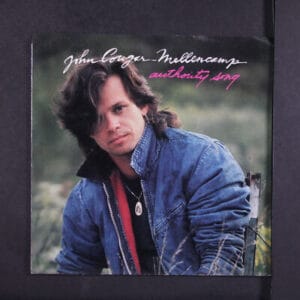
September 4, 2026 —– Chart #366
Hello Music Friends,
Before John Mellencamp ever wrote a note about fighting authority, authority took his name. In 1976 his management decided that nobody named Mellencamp was going to sell records, and his debut album came out credited to “Johnny Cougar.” The story goes that John found out about his new name about the same time the record stores did. He hated it. He also needed the career, so Johnny Cougar it was, then John Cougar, and for seven years the man from Seymour, Indiana answered to a stage name he never asked for. Keep that in mind the next time you hear him snarl “I fight authority, authority always wins.” He wasn’t writing fiction. He was writing an autobiography with a backbeat.
The turnaround came in 1982, when American Fool and “Jack and Diane” made him a superstar and handed him something he’d never had: leverage. He spent it immediately. For the 1983 follow-up, Uh-Huh, he demanded his real name back on the cover — John Cougar Mellencamp, the Cougar now on notice and gone entirely a few years later. Then he skipped the fancy studio, hauled his band out to a friend’s house in Jackson County, Indiana, and cut the album rough and loose, the way he heard it in his head. The label president told him he hated the record. Mellencamp’s response, cleaned up considerably for a family blog: it’s not your job to judge the record, it’s your job to sell it. (The uncut version is worth looking up. It’s saltier.)
The label sold it. Uh-Huh went to No. 9 and threw off three Top 20 singles: “Crumblin’ Down,” “Pink Houses,” and, in the spring of 1984, “Authority Song,” which climbed to No. 15. Not bad for a record the boss hated. I’ve had meetings like that. I suspect you have too.
Mellencamp never hid where “Authority Song” came from. He called it “our new version of ‘I Fought the Law'” — the old Bobby Fuller Four classic filtered through an Indiana garage. Same fight, same result, better sense of humor. Because that’s the secret of this song: it’s not angry, it’s grinning. The narrator keeps getting flattened and keeps getting up, and he tells you straight out he’s been doing it since he was a young kid and he comes out grinning. He calls his preacher for strength and gets told to grow up, and fires back the best two lines on the album: growing up leads to growing old and then to dying, and dying to me don’t sound like all that much fun. That’s not rebellion. That’s a philosophy. I’ve been road-testing it for years myself and can report it holds up.
And listen to what’s underneath it — that’s Kenny Aronoff on drums, one of the great engines in rock and roll, driving the thing like he’s late for something. Cash Box praised the record’s pounding rhythm section when it reviewed the single, which is a little like praising the Grand Canyon for being deep, but they meant well.
Playing it is a pure joy, and I mean joy in the technical sense: three chords and no adult supervision. The song hammers along on A, D, and E — the first three chords anybody learns — in a quick, chugging eighth-note strum that never lets up. There’s no fingerpicking, no fancy voicings, nothing to practice except stamina. Go to drop D on your bottom string and you will catch a bellowing bottom end growl as you hammer through the chords. Lock into the rhythm, keep your strumming hand loose, and drive it like Aronoff drives the drums. The vocal sits in a comfortable shouting range, which is the correct way to sing it — this is not a song for crooners. And when you hit the breakdown near the end, where everything drops to a whisper before roaring back, milk it. That moment is the whole show. Play this one when the room is getting sleepy and watch what happens. Authority may always win, but nobody in the audience will be checking their phone.
Keep Rockin’,
Stan Bradshaw