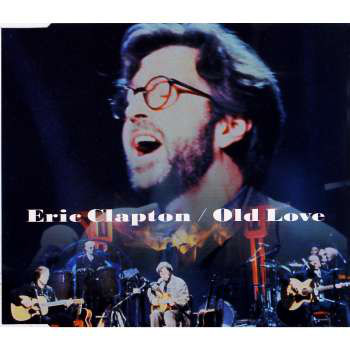
August 28, 2026 —– Chart #365
Hello Music Friends,
No woman in the history of rock and roll ever got better songs out of her men than Pattie Boyd. George Harrison married her and wrote “Something.” Eric Clapton fell for her while she was still married to his best friend and wrote “Layla,” which is what desperation sounds like with a slide guitar. Then Clapton married her and wrote “Wonderful Tonight.” Three of the greatest love songs ever recorded, one muse. But every story has a last chapter, and in 1989 Clapton wrote that too. The marriage was over, the divorce was final, and the song was “Old Love.” Nobody ever says it’s their favorite of the four. It might be the truest.
Here’s the setting. Clapton in 1989 was a man rebuilding. He’d gotten sober in ’87, the marriage to Pattie had come apart, and he was making his eleventh studio album, Journeyman, with something to prove. For help he called in Robert Cray, the young blues star out of the Northwest whose Strong Persuader album had put contemporary blues back on the charts. Cray played guitar on four tracks, and one afternoon the two of them wrote “Old Love” together — the old master and the young gun, trading lines about a love that won’t leave the premises. Watch any film of the two of them playing it live and you’ll see two men grinning at each other between solos like they know they got away with something. They did.
And here’s your trivia-night fact: “Old Love” was never released as a single. Not in 1989, not ever. Like last week’s “Father and Son,” it took the long road — radio play, concert halls, word of mouth. A lot of Clapton fans will tell you it’s the strongest track on Journeyman. The record company apparently never got the memo, and it didn’t matter. Songs this good hire their own publicity department.
Then came the second life. In January 1992, Clapton sat down on a stool at Bray Studios outside Windsor with an acoustic guitar and taped an MTV Unplugged session. That album became the biggest-selling live record of his career, swept the Grammys, and gave “Old Love” a complete makeover — slower, softer, the electricity traded for smoke. If the Journeyman version is a man arguing with a memory, the Unplugged version is a man who has quit arguing and started living with it. That’s the one I keep coming back to.
What’s it about? The lyric is as direct as a telegram: old love, leave me alone. He sees her face, he feels her touch, and he wants none of it, because wanting it is the problem. “Layla” begged the woman to come. “Old Love” begs the memory to go. It took Clapton nineteen years to travel between those two sentences, and you can hear every mile.
Now, playing it. This is the easiest chart of the month for your hands and the hardest for your soul. The Unplugged arrangement lives in A minor — Am7 and Dm7 carry the verses, G and C pass through, and everything resolves on an E7 that’s where all the blues in the song is hiding. No capo, no stretches, maybe five shapes all night. Which is exactly the trap. With this few chords, the song is all feel: keep the tempo slow — slower than that, even — and leave space between the phrases. The silence is doing half the work. Sing it low and a little tired, like a man telling the truth at two in the morning. And when you reach the spot where Eric and Robert traded solos, don’t be shy. It’s a two-chord vamp, the A minor pentatonic box you already know, and nobody’s grading you. Every guitar player deserves the chance to close his eyes and be Clapton for sixteen bars. This is the song that grants it.
Keep Rockin’,
Stan Bradshaw